Vinati Organics Ltd
A father named his company after his daughter and bet on two chemicals nobody wanted to make. She turned IBB and ATBS into a global monopoly — ~65% of the world's ATBS, run out of Mumbai.
PUBLISHED 17 JUN 2026
- Ticker
- VINATIORGA
- Exchange
- NSE
- Sector
- Specialty Chemicals
- Market Cap
- ~Rs 20,000 cr
THE BEGINNING
The Man Who Walked Away at the Top
In 1989, a 40-year-old chemical engineer named Vinod Saraf did something that most people would call reckless. He was already a CEO, a man who had topped his state board exams at 17 and collected a gold medal for his MBA at 19, a career built on being the smartest person in almost every room he walked into. He had the salary, the title, and the security that an entire generation of middle-class Indians spent their whole lives chasing. And he gave it up to start a company from scratch.
The decision did not come from frustration or failure. It came from a quieter, more dangerous instinct — the belief that he could build something more durable than a job. India in 1989 was still two years away from the economic reforms of 1991, a closed and licence-bound economy where starting a specialty chemicals business meant betting against both bureaucracy and the global giants who already owned the field. Saraf named the company after his daughter, Vinati, a small and sentimental act that would turn out to be strangely prophetic.
From the very first day, the strategy was contrarian. Instead of chasing the high-volume commodity chemicals that everyone understood, Saraf went looking for the chemicals nobody else in India wanted to make. He settled on two obscure industrial molecules with names that mean nothing to ordinary people — IBB and ATBS. It was the kind of choice that looked like a mistake to outsiders and like an opportunity only to the person who had done the math.
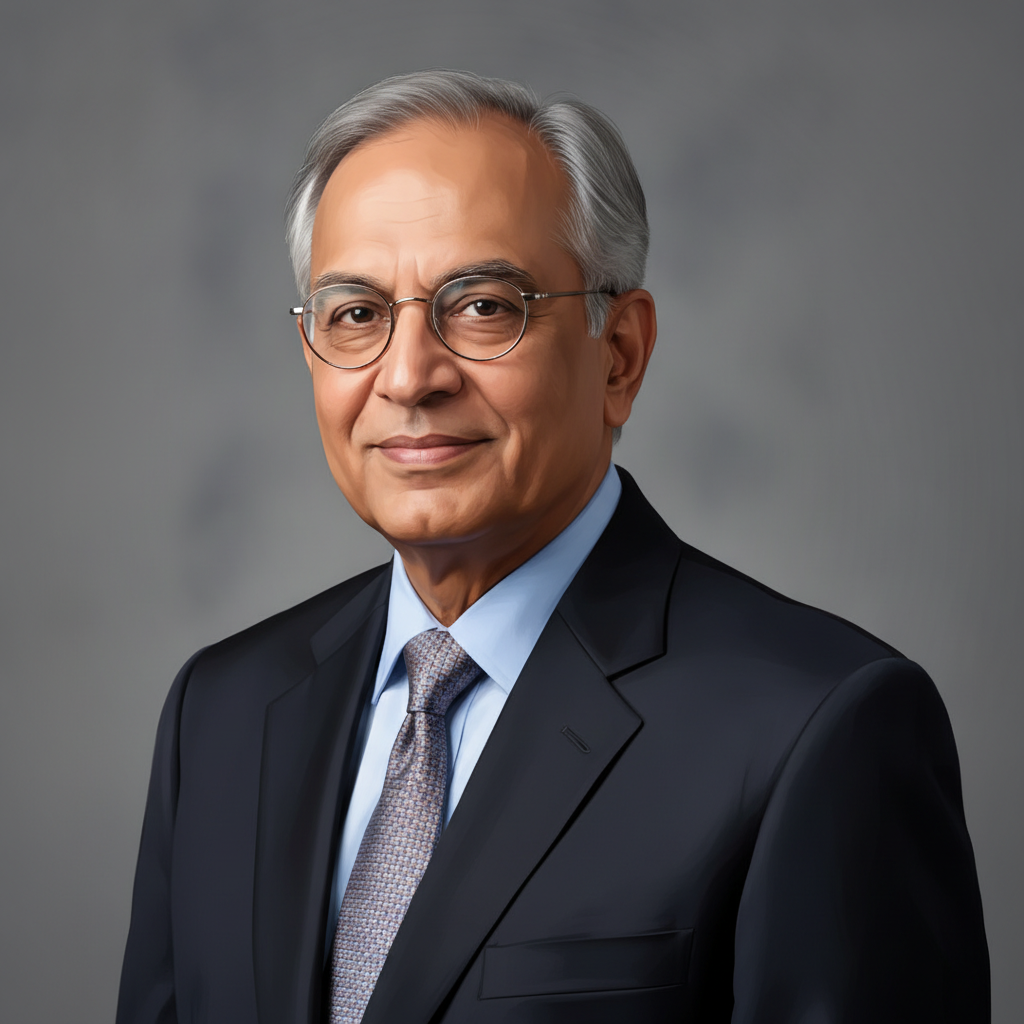
A state board topper at 17 and an MBA gold medalist at 19, Vinod Saraf left a CEO role at 40 to build a specialty chemicals company in 1989. He named it after his daughter Vinati — and chose to compete in molecules the rest of India ignored.
THE OBSCURE BET
Two Chemicals Nobody Had Heard Of
To understand why Vinati Organics works, you have to understand the genius hidden inside an unglamorous decision. IBB — iso-butyl benzene — is a building block for ibuprofen, the painkiller sitting in medicine cabinets across the world. ATBS — a tongue-twisting acrylamide-based monomer — ends up in oil-drilling fluids, water-treatment chemicals, and even personal-care products. Neither is something a consumer ever buys directly. Both are things the world quietly cannot do without.
That invisibility was the whole point. Saraf was not trying to build a brand people loved; he was trying to build a supplier people could not replace. The logic was simple but brutal: pick one narrow molecule the world genuinely needs, then invest relentlessly to become the lowest-cost, most reliable producer on the planet. Once a global pharmaceutical or oilfield customer qualifies your chemical into their process, switching to a rival means re-testing, re-certifying, and re-risking their entire supply chain. The moat is not marketing. It is the sheer pain of leaving.
But getting there was punishing. Specialty chemicals demand years of research, expensive plants, and a level of process control that small companies rarely survive long enough to master. Worse, Saraf had to convince hard-nosed global buyers — American, European, Japanese — to trust a little-known Indian company over the established Western and Japanese suppliers they had relied on for decades. In an era when "Made in India" carried no prestige in advanced chemistry, that was the real mountain.
For years, the company did the slow, unglamorous work: building capacity, winning one qualification at a time, proving that an Indian supplier could deliver consistent, high-purity output shipment after shipment. There were no shortcuts and no overnight wins. It was the patient accumulation of trust, one demanding customer at a time.
Vinati Organics makes roughly two-thirds of the entire world's ATBS — a chemical almost no consumer has ever heard of.
THE TURNING POINT
When the Daughter Came Home
The company's defining moment did not arrive as a product launch or a stock listing. It arrived as a person. In 2006, Vinati Saraf Mutreja — the daughter the company had been named after seventeen years earlier — joined the business. What followed was one of the more remarkable second-generation transformations in Indian industry.
Rather than diversify away from her father's obscure bets, she doubled down on them. She drove an aggressive expansion of ATBS capacity at a time when global demand was rising and competitors were hesitant to commit capital to such a niche molecule. The strategy was audacious: build so much reliable capacity that Vinati would become the default global supplier, the name buyers reached for first, the producer whose scale made it uneconomical for anyone else to challenge.
It worked. Vinati Organics became the world's largest manufacturer of ATBS, eventually commanding around 65% of the global market — and the world's largest manufacturer of IBB as well. Two chemicals that nobody in India had wanted to make in 1989 had become the foundation of a global monopoly run out of Mumbai. The sentimental name on the front door had grown into a genuine description of who was steering the company.
"He picked two molecules the world ignored. She turned them into a monopoly the world now depends on."
The Vinati Organics story · Father and daughterTHE MOAT
Why Nobody Can Simply Copy This
It is tempting to think a chemical with a 65% global share would attract a flood of competitors. The opposite is true, and that paradox is the heart of the business. ATBS is a small global market by the standards of bulk chemicals — far too small to interest a commodity giant, yet far too specialized for a newcomer to break into easily. Vinati sits in the sweet spot: big enough to dominate, small enough to be left alone.
The switching costs do the rest of the work. When a multinational oilfield-services firm or a water-treatment company designs ATBS into its formulation, that chemical becomes embedded in a qualified, regulated process. Re-qualifying a new supplier costs money, time, and risk — and offers almost no upside if the incumbent keeps delivering. So customers stay. Vinati's rivals are names like Lubrizol in the United States and TOAGOSEI in Japan, established players who respect the moat precisely because they understand how hard it is to cross.
On top of scale and stickiness, Vinati kept widening the bet. It moved into antioxidants such as MEHQ and BHA, deepened its position in the ibuprofen-intermediate chain through IBB, and built a portfolio of products where it could repeat the same playbook — be the reliable, low-cost, hard-to-displace global supplier of something specific. The company never tried to be everything. It tried to be irreplaceable at a few things, which is a far rarer and far more profitable ambition.
THE NUMBERS
What the Figures Actually Say
The single most telling number is market share. A company that controls roughly 65% of the global supply of any product is not competing on price every quarter — it is setting the terms of the market. That pricing power, combined with exports to more than 30 countries including the United States and Europe, is why a maker of obscure industrial chemicals carries a market capitalisation of around Rs 20,000 crore.
But the deeper story in the numbers is concentration of strength rather than breadth. Vinati did not build a sprawling empire of dozens of mediocre products. It built towering positions in a handful of molecules and let the economics of dominance compound. When you are the world's largest and lowest-cost producer of something the world keeps needing, scale stops being just a number and becomes a defensive wall.
World ATBS Production — Who Makes It
Approximate global market share by producer
The Vinati Organics Journey — From an Obscure Bet to a Global Monopoly
Where Vinati's Chemicals End Up
Industries that quietly depend on molecules most people have never heard of
WHY IT MATTERS NOW
The Tailwind Blowing Through Indian Chemistry
For most of the last three decades, the global specialty chemicals map was drawn around China. Buyers in the United States, Europe and Japan leaned heavily on Chinese suppliers for everything from intermediates to monomers. That dependence is now being deliberately unwound. Companies and governments alike are pursuing a "China-plus-one" strategy, looking for a second reliable source outside China for the chemicals their industries cannot live without.
India has emerged as the obvious candidate, and Vinati Organics is one of its most credible faces. A company that already exports to more than 30 countries, that already holds roughly 65% of the world's ATBS, and that has spent three decades earning the trust of demanding global customers is exactly the kind of supplier a de-risking world wants on speed dial. The very patience that looked slow in the 1990s is now the asset that matters most.
The longer arc is even more interesting. If global supply chains keep diversifying away from a single country, the premium will shift to suppliers who combine scale, reliability and specialization — and who are hard to replace. That is a precise description of the niche-monopoly model Vinod Saraf chose in 1989 and his daughter sharpened after 2006. The next decade is, in many ways, the decade this business was quietly built for.
The most durable businesses are rarely the most glamorous ones. Vinati Organics was built on a refusal to chase the obvious — on the discipline to pick two chemicals the world ignored and then become genuinely irreplaceable at making them. It is a reminder that monopolies are often won in the margins, in markets too small to attract giants and too hard for newcomers to enter, and that the real moat is not a clever product but the accumulated trust of customers who simply cannot afford to switch. A father bet on obscurity and patience; a daughter bet on scale and conviction; together they turned a sentimental name into a global standard. For a long-term investor, the takeaway is almost old-fashioned: depth beats breadth, reliability compounds, and the quietest companies are sometimes the ones the world can least do without.
Financial figures are sourced from publicly available information and may not reflect the most recent reporting period. This is a story, not investment advice — please verify all data independently before making any financial decision.
Like this story? You can get the next one.
If they're your kind of thing, we'll deliver one a week. No pressure, unsubscribe anytime.
No spam, ever. Leave whenever you like.